In 2024, we spoke with Sandhya, Senior Concepter at Habegger, about how Artificial Intelligence was taking its first steps in the workplace. A year later, it’s clear: AI tools like ChatGPT, Firefly, and Midjourney have completely transformed the creative industry and are now firmly part of everyday creative work.
Especially in live communication, where emotion, experience, and real-time interaction are crucial, new questions arise: How are workflows changing? What new possibilities are emerging? And where do limitations remain? Sandhya’s experiences offer clear insights.
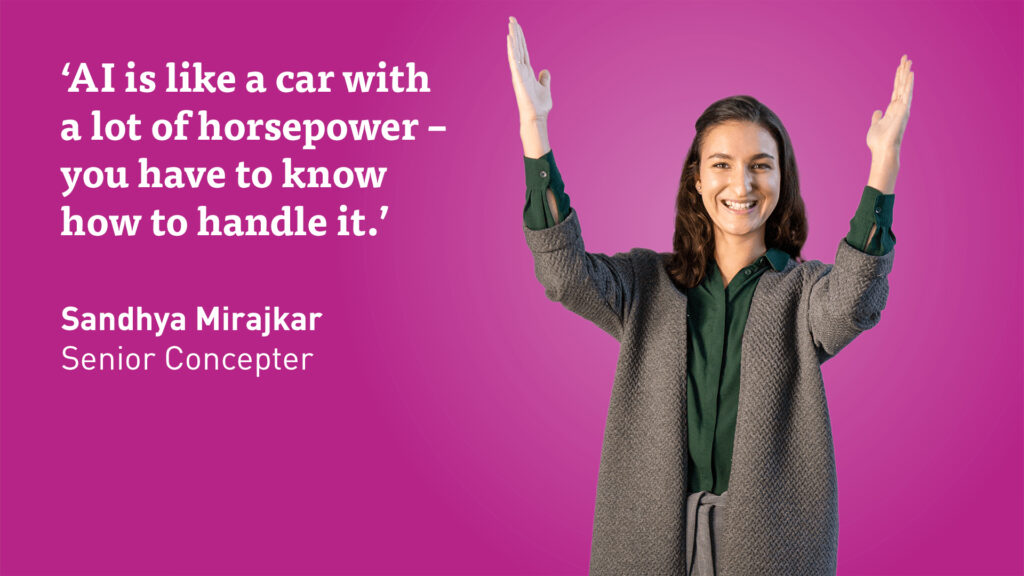
A year and a half ago, ChatGPT felt like a toy for us. Today, it’s an integral part of our daily work. Development has been rapid: ChatGPT can now not only write text but also create or upload files, generate images, and structure complex projects. Especially impressive is the combination of text, image, and video capabilities.
Newly, the integration of image generation across different systems has greatly expanded creative possibilities. Today, various visual styles, perspectives, and visual languages can be combined – something that was barely imaginable a year ago.
What once seemed futuristic is now reality. The possibilities are enormous, but knowing how to use them correctly is essential. Many programs now also have direct AI integrations, such as Photoshop or tools like Miro, making creative work, visualization, and collaboration even more efficient.

AI generated Image 2024
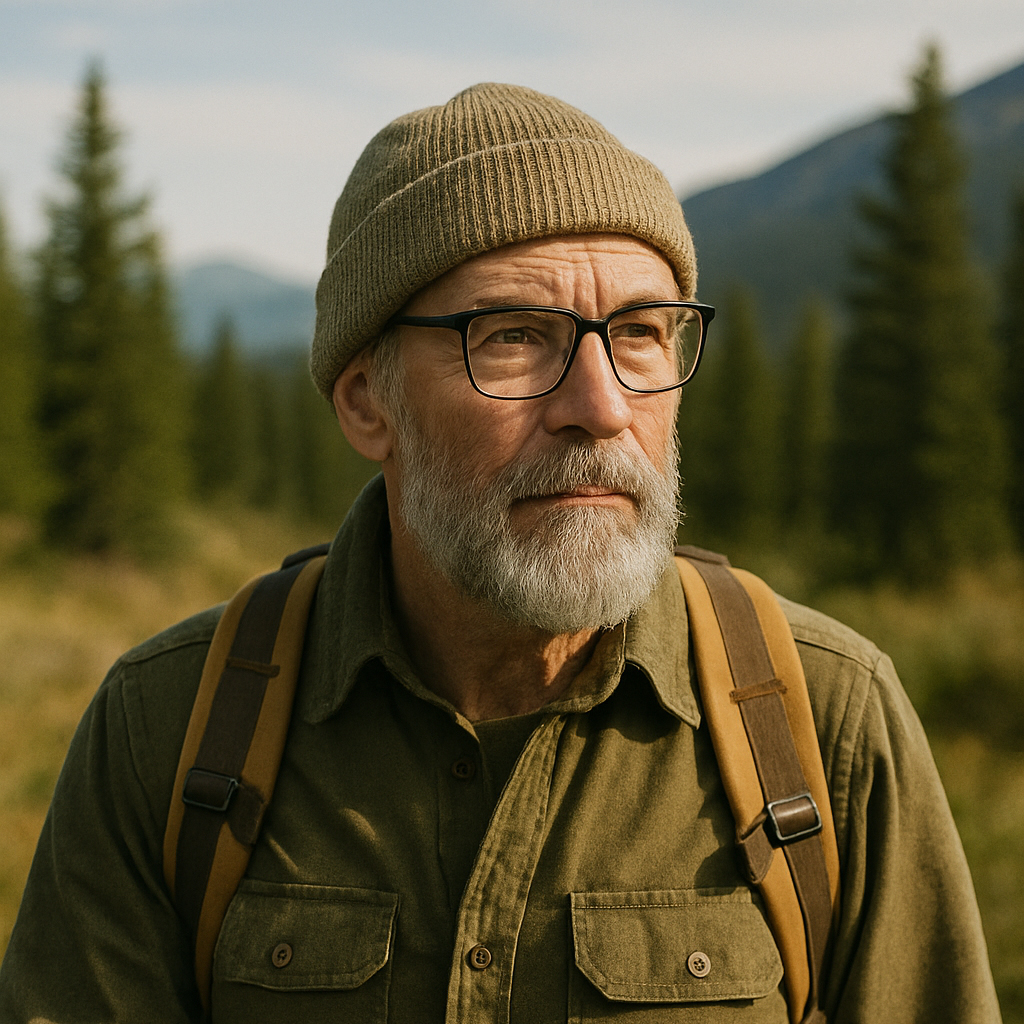
AI generated Image 2025 – Man and Woman
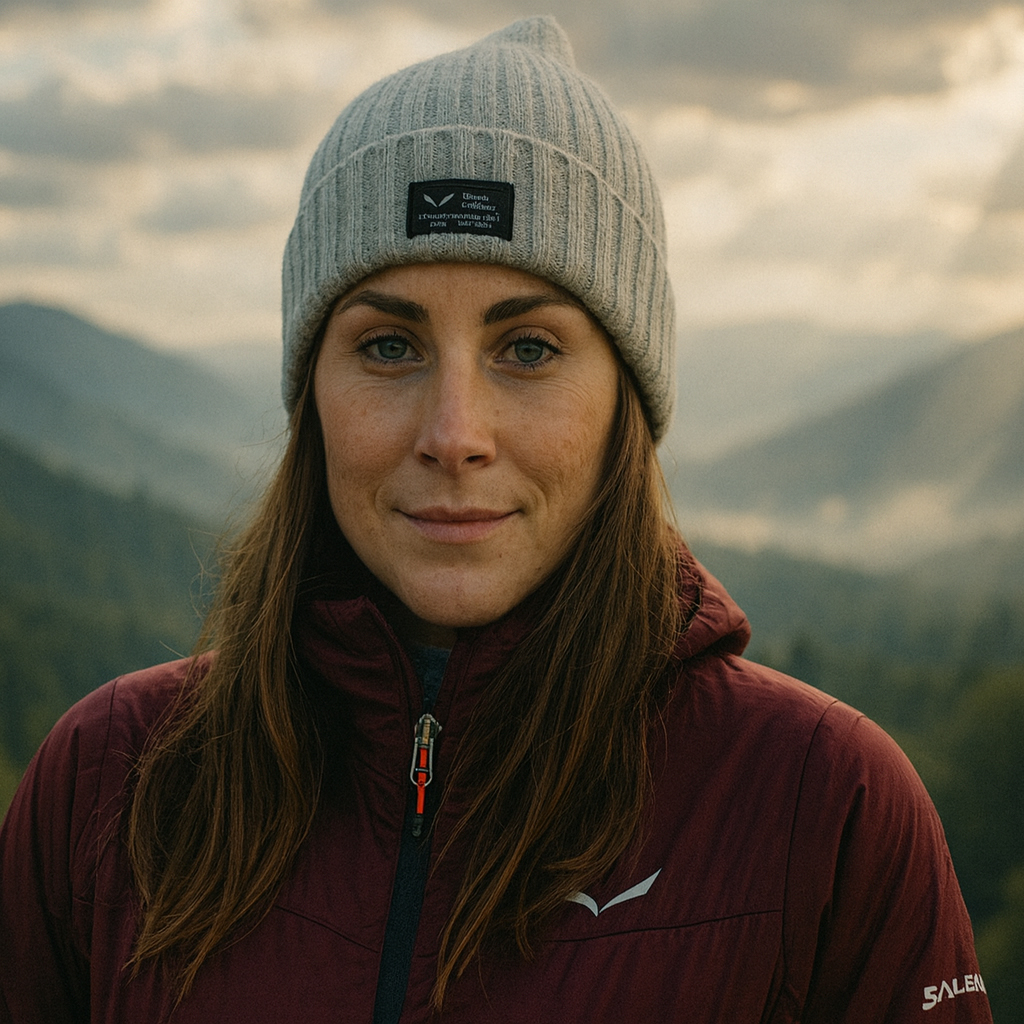
The man and the woman look far more photorealistic, less perfect.
For corporate events, we use AI primarily as a source of inspiration. Whether for concept visualizations, moodboards, or presentations – the tools make work easier but do not replace human creativity.
ChatGPT never provides the final solution. It inspires and stimulates thinking. But what ultimately convinces clients is always created in creation.
Thanks to AI, we can now adjust details in visuals much faster. Previously, changing a small element in an image was time-consuming – today, a single click can swap a blue sweater for a red one or replace a pumpkin with a laptop.
Original Image
Image edited with AI using simple prompts.
With the growing availability of AI tools comes the risk of interchangeability. A year ago, two identical prompts would produce different images; today, the same prompts often yield very similar results. When multiple agencies use the same prompts, similar images are produced – it’s like buying stock footage. Uniqueness gets lost. That’s why we create our own precise, creative prompts to achieve truly individual results. This ensures that clients see something in a pitch they cannot find anywhere else.
AI creates efficiency, not empathy – and that is the key difference. Interpersonal dynamics cannot (yet) be replicated by AI. It cannot understand a client’s dynamic, the atmosphere an event needs, or what resonates between the lines. AI also cannot replicate our in-house experience from meetings, project management, or sales conversations. It is precisely this experience that defines the quality of our projects.
Personally, I’ve become much more critical in my use of AI: I question suggestions, check sources carefully, and ensure that only verified information flows in our work. Data protection is also central subject. All data is anonymized before being processed in AI tools. Client data always stays with us.
Habegger uses a custom-built AI interface: An AI platform that, in addition to various text-based tools such as ChatGPT, Claude, and Perplexity, also enables image generation with Nano Banana through access to internal data. For highly sensitive data, we use a local open-source model. This allows us to offer innovative AI solutions while ensuring a secure environment that meets our high data protection standards.
At the same time, client interest in interactive AI experiences is growing: AI photo booths, virtual assistants, or Meta Humans on stage – demand is huge. AI is increasingly becoming part of the event experience itself.
Even though AI eases routine tasks, creative work remains a human-driven process that requires effort. The entire scenographic and spatial concept is still managed by our team: how content is presented, which accents and priorities are set. For language, themes, mottos, or titles, we take the lead, using ChatGPT suggestions only as a starting point. Development and refinement of ideas comes from our team.
AI helps me think more structurally – for example, with bullet points or categories – but it often jumps too quickly to conclusions. True creativity requires time, detours, and sometimes idle moments. Pinterest or analog moodboards remain important sources of inspiration for many in our team. We want to be guided, but not dictated.
Using AI makes the project team more efficient, freeing up valuable time for what truly matters: creative and emotional work. Our clients don’t get AI-generated ideas – they receive human-driven concepts. Handcrafted quality remains a key differentiator.
Before ChatGPT, clients didn’t care whether we used Photoshop; they wanted perfect results. That is no different today.
I hope that AI becomes more accurate, makes fewer mistakes, and anticipates more. And that the typical AI “look” in images disappears. The more natural the results, the better we can use them.
AI will be integrated into every tool in the future – there’s no doubt about it. The pace of change is incredible. You need to engage with it daily to keep up.
AI is no longer just a hype; it’s a permanent part of creative work – including corporate events.
But the crucial difference remains human: our experience, intuition, and ability to shape emotions.
In February 2023, we released our first podcast episode on AI: Image Creation with AI. Even then, it was fascinating to discuss how AI might change our working world – but who could have imagined how quickly tools, possibilities, and applications would evolve?
Looking back at that episode highlights how much has changed in a short time and how integral AI has become to our creative daily work. For anyone wanting to follow the start of our AI journey, it’s worth a listen – a fascinating contrast to today’s experience:
The Habegger podcast episodes are entertaining, enjoyable and up to speed. Our hosts Sandhya Mirajkar and Malik Zayat discuss trends, innovations and current topics that concern us in live communication.