The events industry continues to evolve – more quietly, but with greater precision. 2026 stands for fine-tuning rather than spectacle. Artificial intelligence acts as a creative partner in the background, supporting processes and content while creating space for human creativity. At the same time, the experience itself moves into sharper focus: fewer effects, more emotion. Spaces are designed to connect, not to overwhelm. 2026 is not a year of bold, headline-grabbing trends, but of conscious decisions – and this is precisely where the strength of contemporary events lies. We spoke with our internal experts and summarised the key trends for 2026 for you.
In 2026, artificial intelligence will not only automate processes but will act as a creative partner, adaptively shaping storylines and visual elements in real time. Creative leadership clearly remains with people: AI provides impulses and variations. The goal is to create emotional depth through minimalist, multisensory experiences.
Clients benefit from human + AI workflows, interactive prototypes and reusable content assets that make creativity scalable and efficient. Technology supports experimentation, amplifies emotion, and enables unique, tangible experiences without replacing human direction.
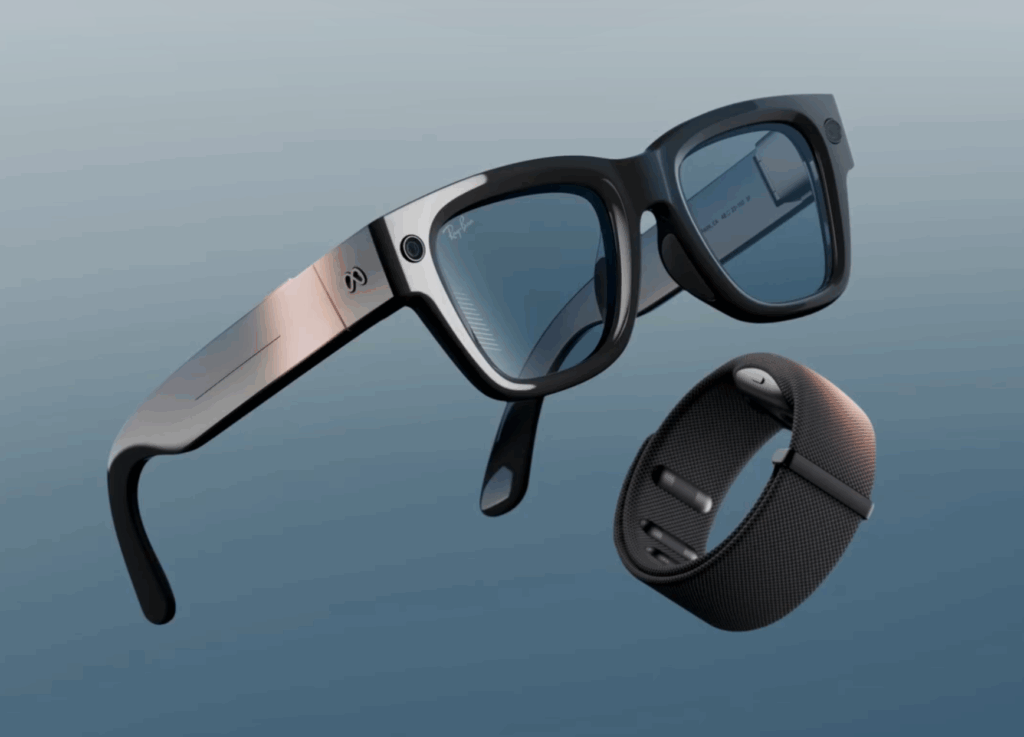
Ray-Ban glasses with built-in AR display
LED installations are becoming more flexible, refined and versatile. Whether ultra-thin, curved or rollable, scenography gains creative freedom – provided that conscious and purposeful use remains the priority. The era of “covering everything in LEDs” is over.
At the same time, new AR glasses are opening up an additional layer of information for visitors. Models such as Ray-Ban Meta combine AR functions, camera and audio in an everyday design, enabling overlays or situational cues without visually dominating the space.
Interactivity is also becoming more accessible. Technologies are becoming more affordable and elements more intuitive. Visitors at events and in visitor centres can immerse themselves even more deeply in experiences, actively co-create content and directly engage with the creative signature of our projects.
Alongside technological advances, our ambition to better understand and actively manage visitor flows and interactions continues to grow. With knw., we use modern tracking and analytics systems that show in real time which areas are most frequented, which topics attract attention and how movement patterns evolve within a space.
Intelligent scoring models allow interest areas to be identified more clearly – for example, which product categories are most used or viewed. At the same time, optimised analytics setups help organisers plan their spaces more efficiently, adapt visitor journeys and respond more quickly in live situations.
The use of location-based technologies is also gaining importance. knw. supports the situational management of venue or hall areas, better capacity utilisation and more dynamic visitor guidance. This data-driven perspective will become a core component of professional live communication in 2026 and is an integral part of our services.
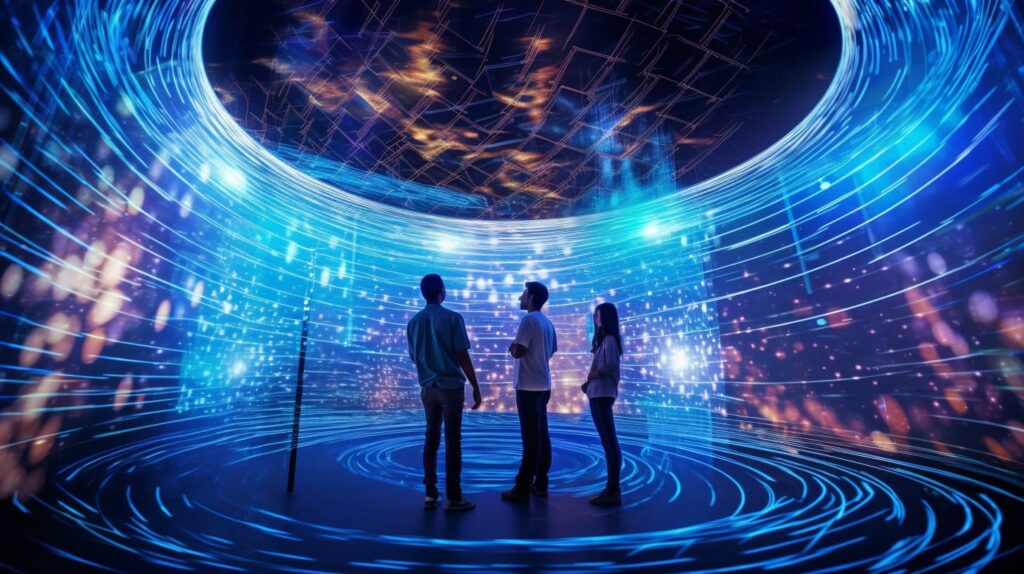
Interest in immersive 3D audio is increasing noticeably – particularly in live environments, where spatial soundscapes intensify emotions and make content tangible in entirely new ways. The use of additional loudspeakers and specialised audio technologies leads to higher material requirements, which is reflected in costs. At the same time, personnel requirements remain comparable to those of traditional audio concepts.
The added value clearly lies in the experience: 3D audio creates depth, orientation and a new sense of proximity to what is happening. Content is not only heard but spatially perceived – a significant gain for staging, storytelling and brand experiences.
Through targeted training in immersive audio, we are building expertise to respond competently and with high quality as demand grows. This lays the foundation for deploying this technology where it truly adds value – and we see strong potential to elevate live experiences to a new level.

Touring productions are becoming larger, denser and more logistically complex, while the number of smaller, compact conference formats continues to grow. Major event venues are increasingly relying on digital signage solutions, such as the Hallenstadion Zurich: as part of a comprehensive upgrade, almost all analogue advertising spaces were replaced by screens. Today, Hallenstadion Zurich operates around 450 displays.
This allows entire venues to be staged flexibly and consistently in a company’s corporate design – dynamic, scalable and situation-appropriate.