Last-minute event requests are no longer an exception, but part of the new project routine. What does this mean in concrete terms for planning, implementation and collaboration? And how can convincing event experiences be realized even under high time pressure? A look into practice shows what really matters. We take a look behind the scenes: Find out what really matters when it comes to last-minute event requests.
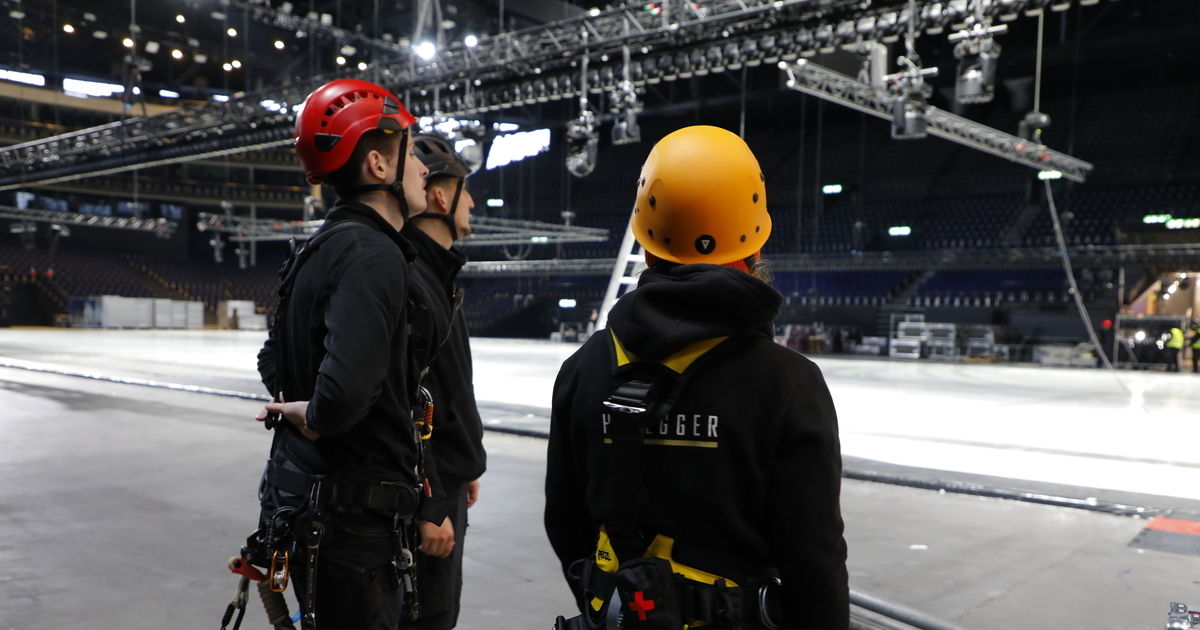
Tight timelines have almost become the standard today. Especially since the COVID period, last-minute event requests are no longer an exception. What used to be planned months in advance often now lands on the desks of our project managers just a few weeks before execution. At Habegger, we experience this dynamic every day. Planning, coordination and execution have to move much faster – without compromising quality or efficiency.
The shorter the lead time of a project, the less room there is for processes in the background. It becomes particularly critical when key approvals on the client side or within project coordination are delayed, or when requirements change at short notice. Processes that would normally build on each other – such as concept, technical planning and scheduling – then have to run in parallel and in close coordination.
Last-minute requests are rarely isolated cases. Ongoing plans often need to be fine-tuned in order to integrate new projects smoothly. In our project work, a recurring pattern emerges: this additional coordination effort ties up more resources in project coordination.
Ad-hoc booking of experienced personnel also becomes more challenging, as both Habegger employees and freelancers are already committed to productions.
Projects with tight timelines require excellent management. From our experience, we know:
Especially with short timelines, this early clarity provides noticeably more stability throughout the project.
For the success of short-term project requests, another factor plays a decisive role: the speed and clarity of decision-making on the client side.
Lean decision-making processes have a positive impact on project efficiency. When responsibilities are clearly defined, noticeably more room for action is created within the project.
Fast decisions create time – and this gained time flows directly back into quality:
 more depth of detail in the executionmore thought-out dramaturgymore stable planning in implementation
Another plus: give trust to the service provider. When the framework and objectives are clearly defined, it helps enormously to allow room for manoeuvre. Especially under time pressure, pragmatic decisions can be made more quickly when not every detail has to be checked multiple times. This makes it possible to react flexibly while keeping the core of the project in focus.
Our experience shows: where decision-making processes are clear and trust is present, even short-term requests can be implemented efficiently and in a goal-oriented manner.
Short-term event requests are very feasible – provided the framework conditions are right. What matters less is the available time than the clarity within the project.
In practice, short-term projects work particularly well when:
the goal and message are clearly definedthe project scope remains stable after the briefingdecision-making processes are kept leanclients and implementation partners work in close coordination
They usually become challenging when requirements shift during execution or the scope grows at short notice.
As well as short-term projects can work, additional lead time creates noticeable added value in certain constellations. In our projects, this is particularly evident where greater creative or technical depth is required.
With more lead time, it is possible to:
further refine creative conceptsdevelop technical solutions more preciselyalign processes even more efficientlyintegrate additional ideas and possibilities at an early stage
Long story short: when objectives are clearly defined, priorities are set cleanly and coordination is clarified early on, even short-term event projects can be implemented in a stable and efficient way.
How short can an event really be delivered – and when does it become critical? Sandhya and Malik talk about last-minute event requests: from spontaneous pitches to events with just a few weeks’ lead time – and how we bring them to life.
Would you like to know how short-term event requests can also be structured and successfully implemented? Then get in touch with us – we share our practical experience and show what really matters under time pressure.
Subscribe to our newsletter and follow us on social media