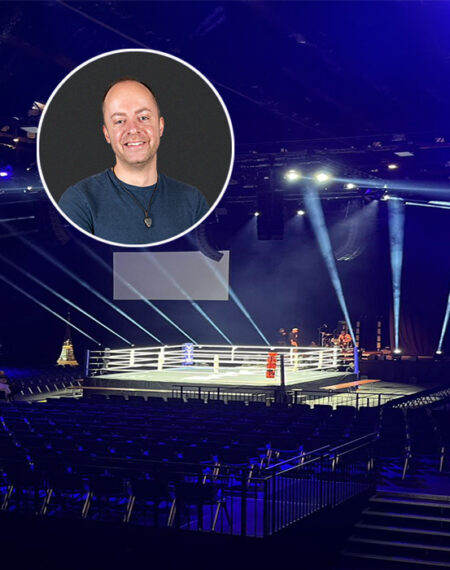
As a video technician at Habegger, Fabrice Kern ensures that content at events reaches attendees clearly, precisely, and at just the right moment. Whether it’s cameras, LED screens, or livestreams, he makes sure that the technology and visual impact work together seamlessly. In this interview, Fabrice offers a glimpse into his varied daily routine and shares what excites him most about his job as a video technician.

Fabrice Kern, Video Technician
After secondary school, Fabrice knew one thing above all: he wanted to do an apprenticeship – but he didn’t know which one. It was only indirectly, through people around him, that he became aware of the apprenticeship as an Event Technician EFZ.
Even starting out in the midst of the COVID-19 pandemic, when the events industry had come to a standstill, did nothing to dampen his enthusiasm for live communication. After a trial day at Habegger, it quickly became clear: event technology is his world.
Looking back, he describes his apprenticeship at Habegger as exactly what one would hope for when starting a career – diverse, challenging, and full of new experiences. Every assignment was different, every problem was new, and every project was an opportunity to learn. And it was precisely during this time that it became clear where his path would lead – to becoming a video technician
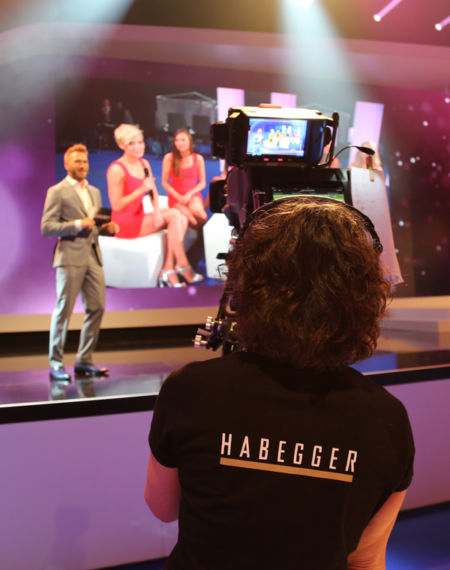
Fabrice handles various tasks in the field of video technology. In broadcasting, for example, he works as a cameraman, in video engineering, or in the control room. The goal there is not just to capture images, but to control them so that they fit together visually with precision.
Colors, brightness, white balance – everything is controlled centrally. This ensures a consistent final image. What appears to the audience as a cohesive whole is actually created behind the scenes from many individual components. Cameras, livestreams, production, screen management, LED walls – everything interlocks. That’s exactly what makes the job so exciting.
“You have this umbrella term ‘video technology,’ but within the field there are different roles. In the end, they have to mesh together, like gears.”
There’s no such thing as a typical workday for a video technician. Some days, Fabrice works in the office – planning, coordinating, or getting hands-on in the workshop. Soldering cables, modifying systems, and refining control cases.
Productions are also part of his daily routine; he sets up equipment, configures systems, and tests everything down to the last detail to ensure that a music show, a sporting event, or a corporate event runs smoothly. It is precisely this mix that makes the job so appealing to Fabrice: constantly new locations, new setups, and new challenges.
You rarely do the same thing twice. And even if you do, it’s still different every time
Fabrice is particularly impressed by large-scale productions. For example, when – as was the case at the Koch Group’s 77th anniversary celebration – a massive LED wall is built step by step on site from a technical blueprint, assembled meter by meter until it ultimately dominates the entire stage set.
At the same time, it is precisely these projects that come with greater responsibility. For a major event organized for an international defense contractor, Fabrice took on the role of video lead for the first time – overseeing everything from planning to execution during the show.
That was a really cool moment because I realized: it works. I can do this.
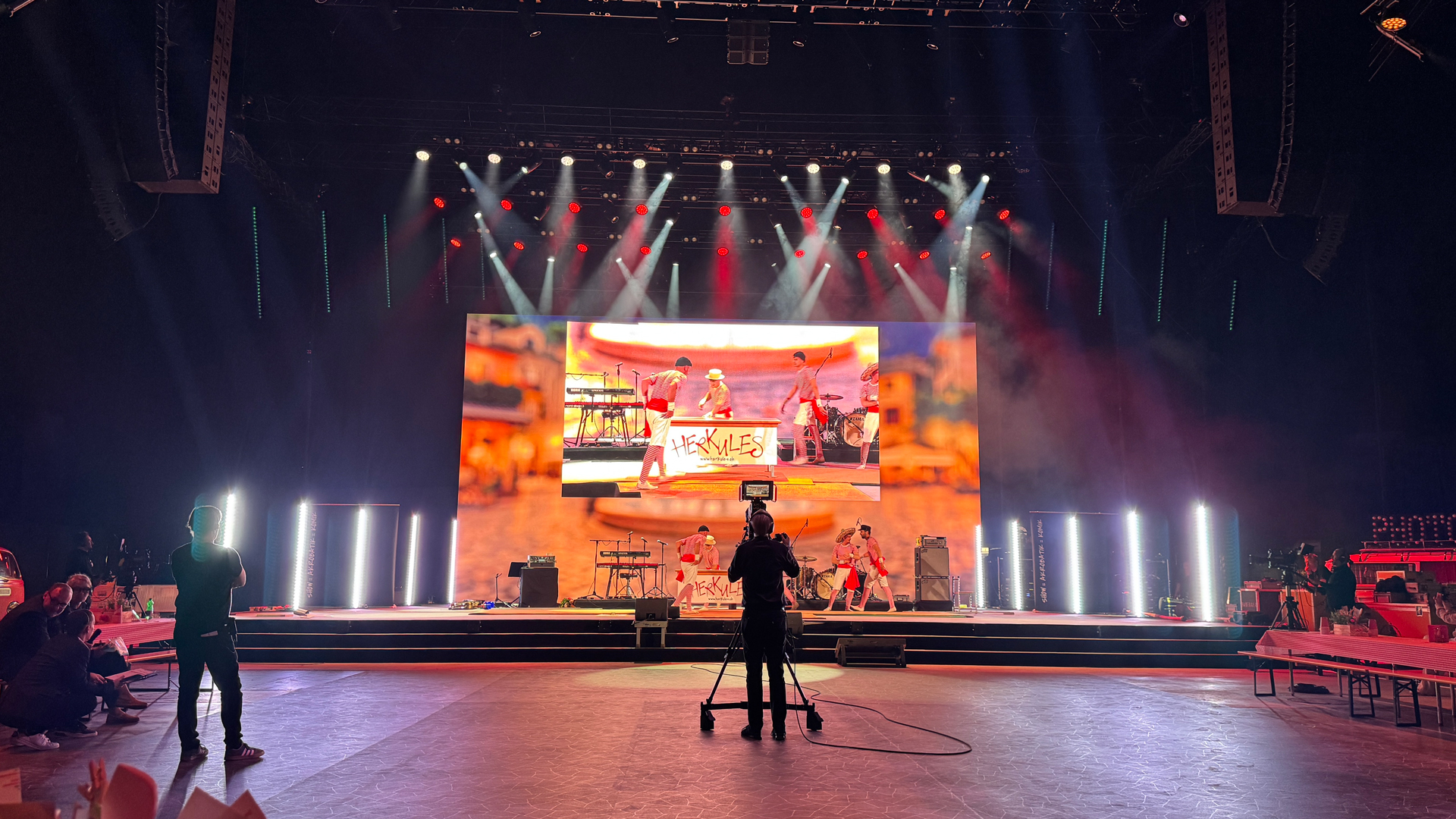
LED wall at the 77th anniversary of Koch AG
Especially during live events, there are always situations that require a quick response. When things don’t go as planned, one thing matters above all else: staying calm and keeping a clear head. Because if you act hastily in such moments, you’ll make mistakes – and those mistakes can become visible during the event.
At the same time, curiosity is a crucial factor. Technology is constantly evolving – and anyone who wants to specialize in video must be willing to actively acquire knowledge. It’s important to approach your colleagues and say: “Take me along, I want to learn this.”
The more project experience you gain, the more expertise you can acquire and the more you can learn from a wide variety of situations. Because in the end, it’s precisely this combination that makes the difference: technical understanding, the ability to stay calm under pressure – and the willingness to constantly develop further.
Subscribe to our newsletter and follow us on social media.