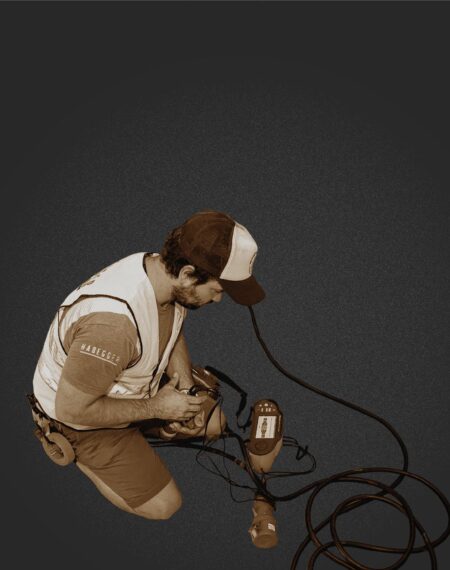
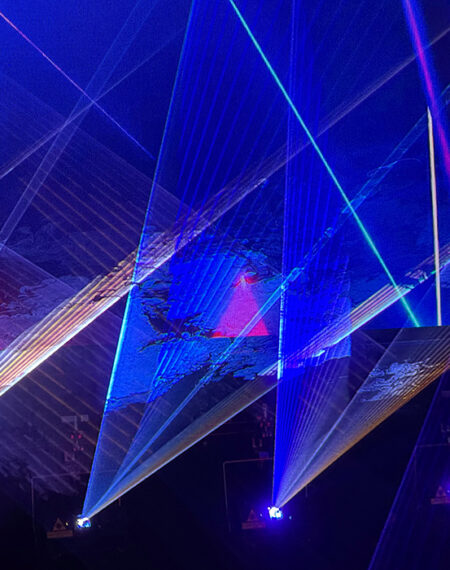
With approximately 2,800 square metres of warehouse space, Habegger manages about 40,000 parts – ranging from individual cables to LED walls. This inventory forms the basis for about 1,800 projects per year. To ensure this flow of materials runs smoothly, it takes structure, experience, and a strong team that can maintain a clear overview even under time pressure.
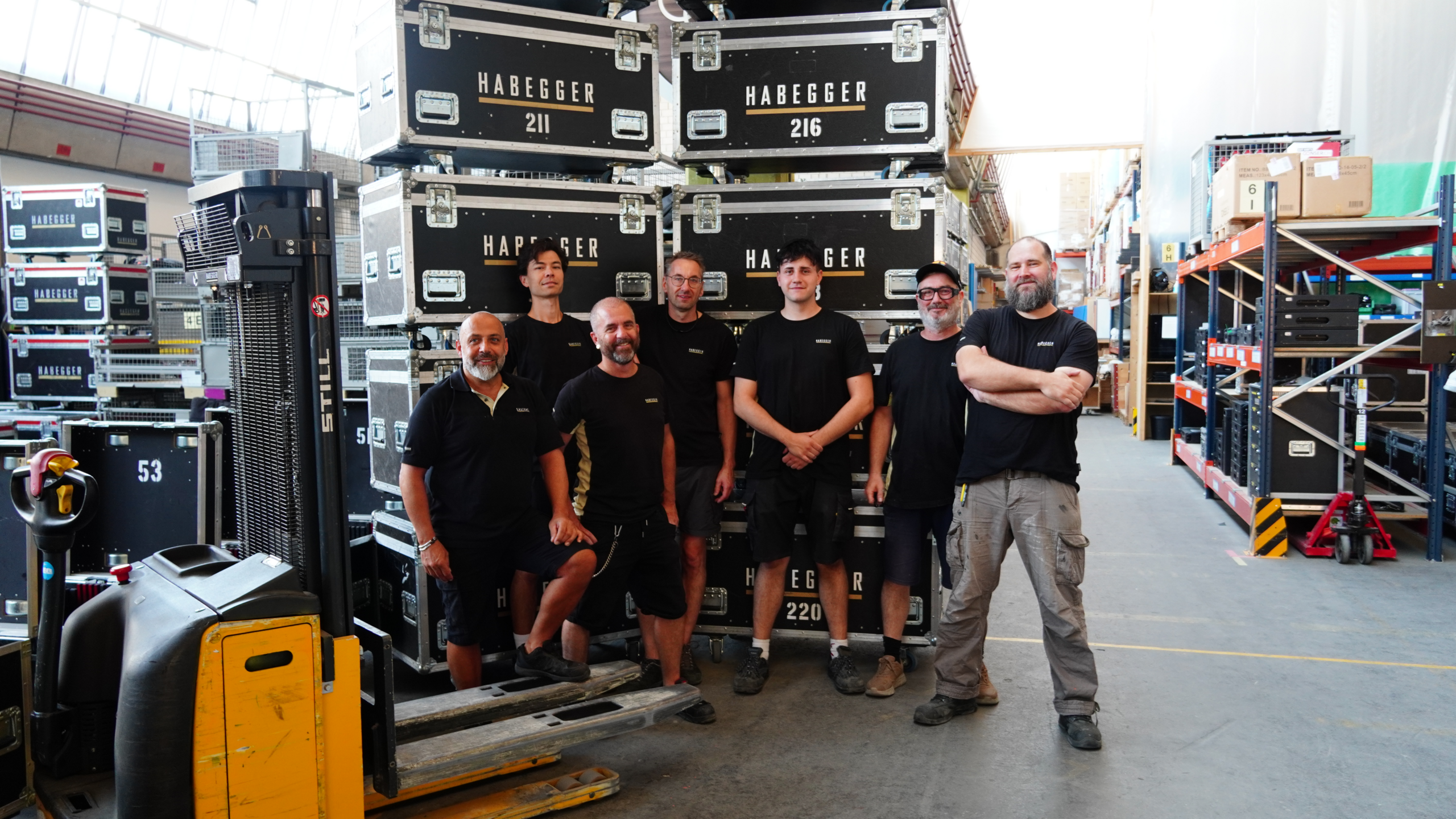
Once an event is over, the work behind the scenes is far from finished, because a new phase begins for the warehouse team. After events such as an international ice hockey tournament, the Holcim Annual General Meeting, or a Hecht concert at the Hallenstadion, cases, trusses, cables, LED elements, and other event equipment arrive back in Regensdorf.
Long before the first trucks pull up to the loading dock, preparations are already well under way in the warehouse. The team knows which returns are coming in, which areas will be needed, and which equipment will be required again soon.
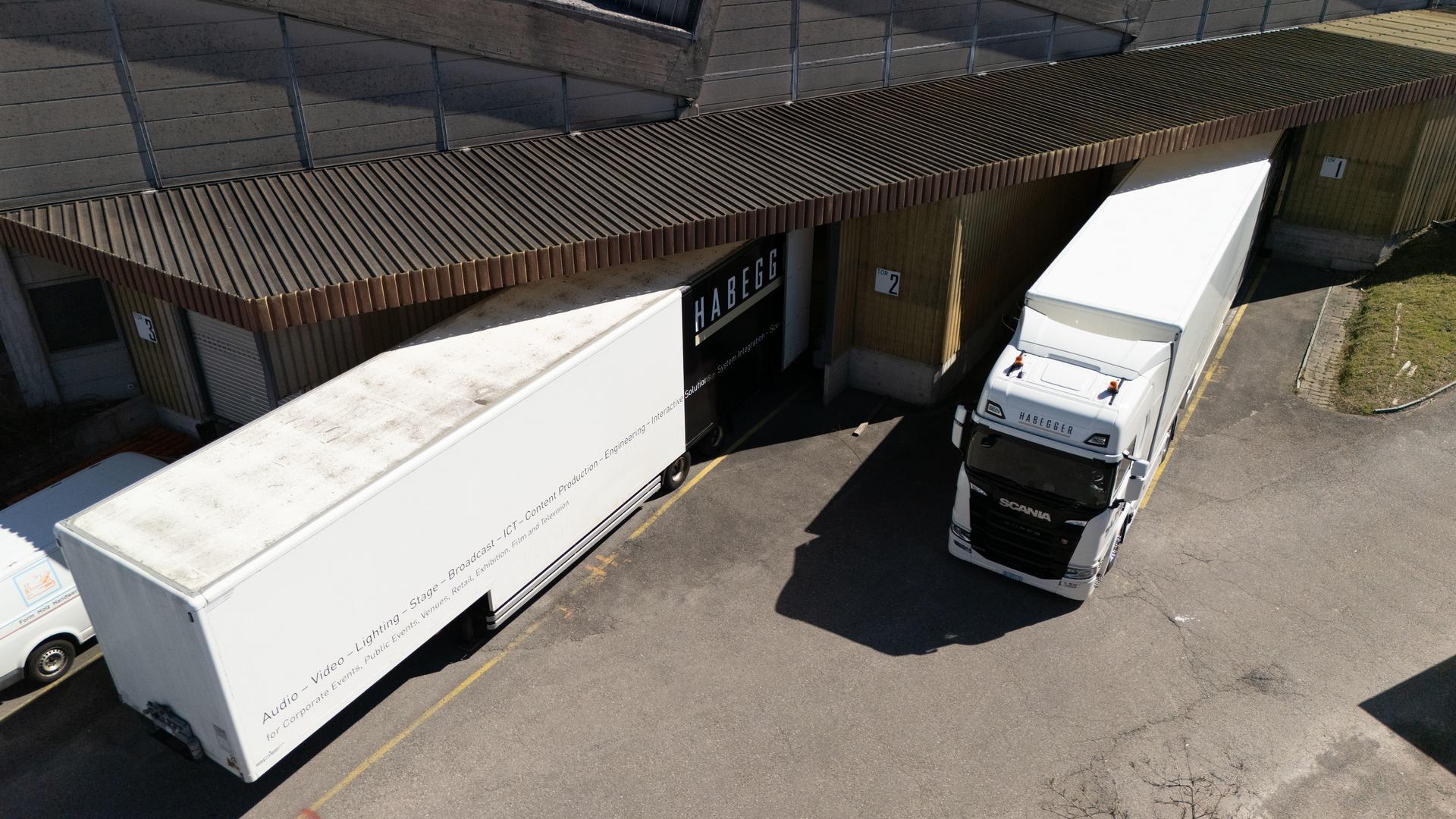
After unloading, the warehouse becomes a hub between the conclusion of one event and the next assignment. Cases are opened, materials are moved, and spaces are reassigned. Forklifts travel back and forth between loading docks, shelves, and setup areas. Behind the scenes is a team that knows the inventory inside and out.
It becomes particularly challenging when returns and new setups are taking palce simultaneously. During peak times, 20–25 trucks leave the warehouse each week. While equipment is being inspected in one area, it’s already being assembled for the next setup in another. For large-scale productions, setup alone can take one to two days. For events like Art on Ice, several tonnes of lighting, audio, video, and rigging equipment quickly add up – all of which must be inspected and set up days before the show.
Those who work in the warehouse don’t just move equipment; they must recognize the bigger picture: What belongs to which project? Which materials need to be inspected? What will be needed again soon? This experience is crucial in the event industry because there is often very little time between dismantling, returns, and the next setup.
The staging areas reveal what a project has left behind: complete cases, missing parts, damaged cables, jammed casters, or materials that will be reused immediately. Equipment ready for use is cleaned and prepared for storage. Defective or incomplete equipment is sent for repair or further investigation. What matters here is not just looking at the individual part, but also understanding the role it plays in the next setup.
Once the equipment has been inspected, it becomes part of the system again. Cables, trusses, LED elements, consoles, devices, and accessories are returned to their storage locations. It is not only crucial that each item is physically in the right place; the information associated with it must also be accurate.
To ensure a project can be reliably equipped, it must always be clear which equipment is available, what has already been reserved, and where additional equipment needs to be sourced. This overview is created through collaboration between the warehouse team, resource planning, and HIS, Habegger’s internal ERP system. The warehouse tracks the actual flow of equipment, while scheduling coordinates availability and project requirements. In this way, returned equipment becomes usable again for planning purposes.
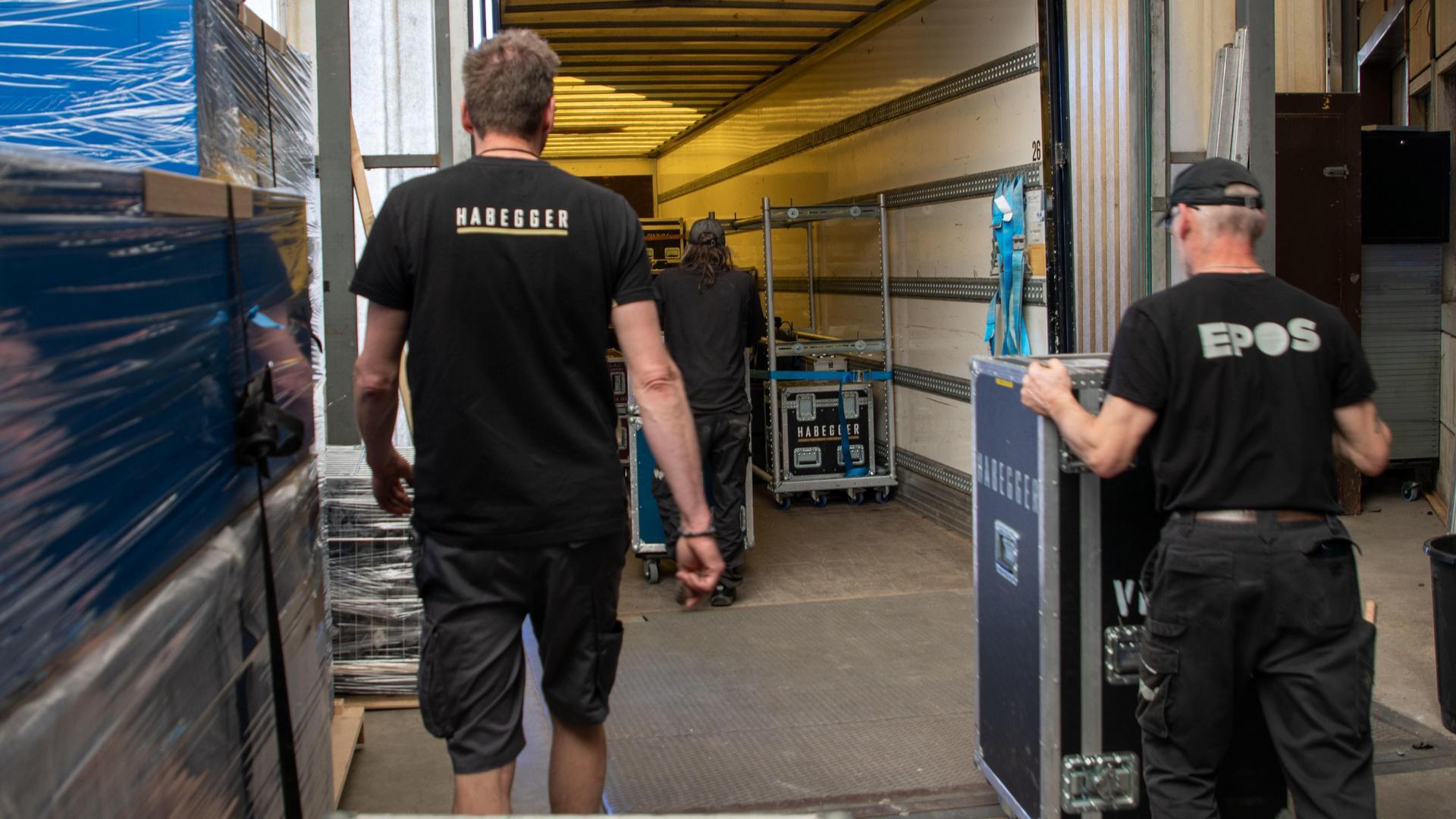
Behind every production is a logistical operation that rarely takes centre stage. At the Habegger warehouse, equipment is not simply managed; it is kept in constant circulation. After every event, it is inspected, sorted, repaired, replenished and prepared for its next use.
The combination of an extensive equipment inventory, an experienced team and clearly defined processes reveals just how much work takes place between two events. When everything is in the right place at the right time for the next project, this process has already done its job.
Subscribe to our newsletter and follow us on social media.