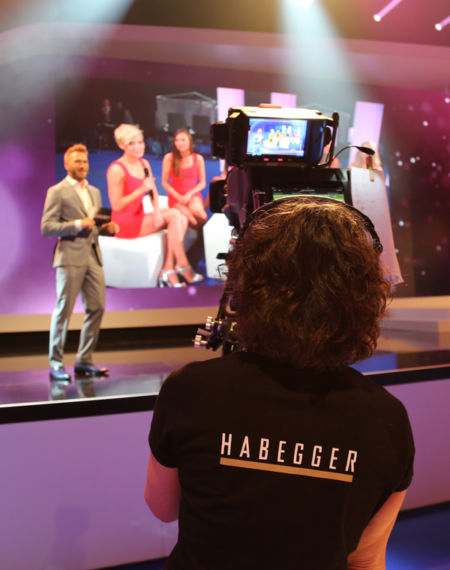
With the campaign “Habegger around the world”, we take a look behind the scenes of major international projects of the Live Matters Group – a global network that includes Habegger Switzerland, Habegger Austria and satis&fy. People who bring brands to life around the world share their experiences, challenges and highlights.
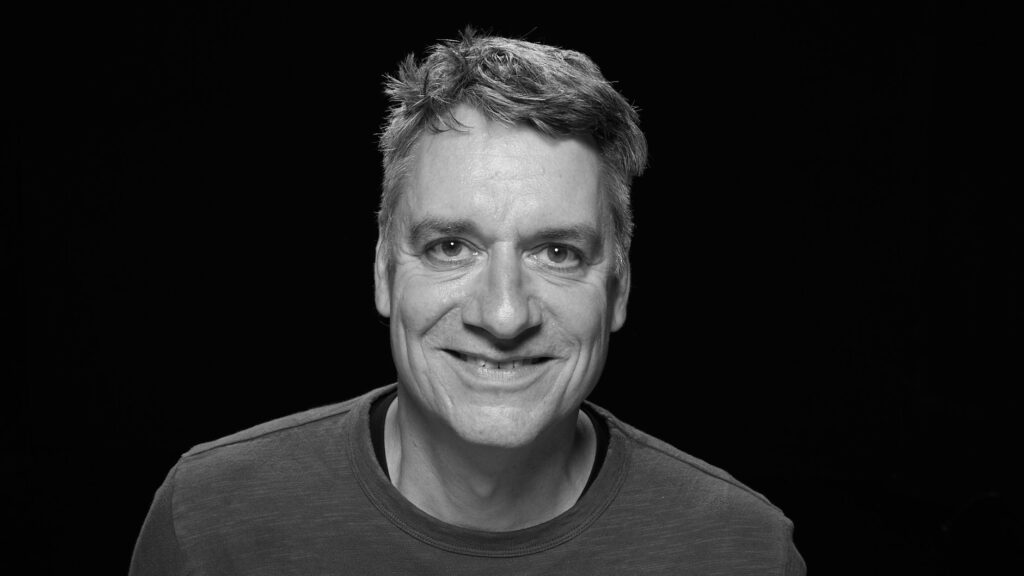
A word with Dirk Vennemann, known to everyone simply as “Venne”. For over 30 years, he has shaped the international event landscape at satis&fy and today works as Global Key Account for international projects. Hardly anyone knows the dynamics of global brand appearances as well as he does – especially when it comes to one of his longest-standing clients, Nike.
In this interview, Venne talks about how it all began, what fascinates him about international projects and why authenticity in brand staging is key to success.
I honestly stumbled into it a bit during my studies. I joined satis&fy in 1993 and did all sorts of things: lighting, rigging, truck driving. At some point I moved into project work and took on more responsibility. In the mid-90s, I took over our client Nike, which I enjoyed right from the start – the “easy-going” Americans were a refreshing change from our other clients.
In the late 90s, the first assignments came directly from Nike HQ in the US. I was over there regularly, deepened relationships and set up our global Nike projects. In 2012 we opened our office in Portland, largely built on those contacts. I was on the board at the time but stepped down to focus fully on Nike and developing our US business.
From 2013 to 2023, I lived in the US. An intense time during which I fully immersed myself in American event culture. Those years strongly shaped my perspective on international projects.
In my current role, I ensure that the right teams from the Live Matters Group deliver our international projects. I no longer manage projects directly; instead, I set them up, maintain client relations and bring in new business. But Nike has remained a common thread throughout my entire career.
Over the years, these have mainly been major international sporting events: the Olympic Games, Football World Cups or the Winter Games in Milano Cortina 2026. Plus events around the Super Bowl or the NBA All-Star Weekend – each of them huge productions with large budgets in the US.
Many of these projects are B2C activations: brand experiences designed to make products emotional and tangible.
Definitely: travelling and immersing yourself in other cultures. You meet new people, languages, and mentalities – it’s always fascinating. At the same time, the challenges, because the conditions vary in every country: different regulations, customs, logistics, communication. You need teams that speak English and are willing to be away from home for longer periods. But that’s what makes it interesting.
And yes, I admit it: travelling to Paris is definitely more exciting than going to Wanne-Eikel – no offence. (laughs)
Definitely Beijing 2008, in preparation for the Olympic Games. We set up an LED stage next to the Forbidden City, in front of a temple, where the Chinese team kits were presented. A completely unexpected and, at the time, unprecedented staging.
Logistically it was insane: material for the LED stage came from four continents. For that time, it was a real statement and highly innovative, inspired by a George Michael tour. It was cold, wet, dark, but the experience was incredible. We worked through the nights with the local teams, wandered through the city looking for materials, ate and celebrated with locals. Those moments stay with you.
At sports events, the key question is whether you’re a sponsor or not. Without sponsorship, you don’t have access everywhere; certain zones are off-limits for activations. That makes a big difference.
And then there are the local resources – at large events they’re often limited. Good preparation is everything. “Lack of lead time costs money” is one of the most important learnings.
Lead time, budget planning and stakeholder management – everything is interconnected. It takes planning: what is better where in terms of quality, what local resources exist, what makes economic and ecological sense. This often results in us producing components or technology in Germany and shipping them abroad to the event location.
With our offices in Portland and Brooklyn, US projects are no longer international for us but local. That changes a lot. Then there’s our global partner network, such as the AV Alliance, across Asia, Europe and the US. People know and trust each other. That’s invaluable when it comes to quality and reliability.
Most importantly: Stay true to the global brand while remaining locally authentic.
That’s always a balancing act. But a basketball event in the north of Paris works differently from one in Harlem. If you want your event to be relevant to your audience, you need local partners who understand how those local communities tick.
Even though I’ve been to Paris countless times – I don’t know youth culture there as well as someone from Paris. That’s why we bring in local stakeholders.
It starts with your own KPIs. The client needs to define what they want to achieve: Should the audience learn something, feel something or take something away?
A good example: Nike in Paris during the Olympic Games. We worked with local designers to ensure that the staging and atmosphere we created genuinely suited Paris. The actual brand message was wrapped in a charming ambience – and still felt authentic.
Technology is simply another tool as part of the overall scenographic concept. Lighting, LED, video, interaction – all these elements help create a world of their own. Technology supports storytelling, not the other way around. Modern LED technology has made many things easier of course, because it’s flexible and offers new visual dimensions.
Most of the time, the clients’ specialist departments are heavily involved. We create spaces and moments where visitors can present themselves and the brand – automatically leading to social-media moments and reach. We often set up small studios on site where influencers can create content or conduct interviews.
In this context, we like to use knw. An AI-based event performance analysis tool that measures visitor flow and sentiment. This allows us to understand exactly how guests move through the space and which areas they respond to. The more data you have, the better you can measure emotion, impact and return on experience – and optimise for the next event.
Brand activation is the self-promotion of a brand – 90% B2C. It’s about making the brand, the product and the technology tangible.
An example: the Jordan Brand All-Star Weekend 2025 in Oakland. It told the story of the legendary Michael Jordan NBA shoes, showcased local art and musicians over two days, held pick-up games. Emotional, impressive, experiential. That’s brand activation: storytelling, closeness and enthusiasm.
Or the Nike Night Runs worldwide – executed locally, conceived globally. That’s how you build a real community and strengthen brand equity.
For brands like Nike, it’s a potpourri of stories. These brands have endless touchpoints with consumers, so you don’t just think about one story.
Very pragmatically: Do people show up?
How strong is participation, how do visitors react, how many share their experiences online? At consumer events, you can measure this very precisely – right down to the ROI of individual products and market share gained over time.
In recent years, Nike has managed to reconnect more deeply with individual communities through clear, authentic communication – with locally relevant activations that resonate globally. And thanks to data analysis with knw., we can understand even better today which factors make these successes possible.
In the past, I was deeply involved in the projects and led the project teams. Today, I see myself as a guarantor of quality. When Nike works with satis&fy, they know what they’re getting: a high level of service, worldwide. That applies to an exhibition in Paris just as much as to an activation hub in New York.
Our goal is for satis&fy to remain a household name with every Nike project – for quality, deep brand understanding and strong connections to all stakeholders.
Quite simply: nothing is allowed to go wrong. Every event is a direct touchpoint with the brand, and it has to be perfect.
Nike has extremely high quality standards – including for us. This extends to the on-site staff, because the way we present ourselves is also perceived as part of the brand.
And to be honest: through working with Nike, we’ve learned a lot ourselves – about brand management, attitude and emotion. Many of our other clients benefit from this today.
When you walk into a room and instantly think: “Wow – this is Nike.”
It’s about emotion, texture and that feeling of being part of something special.
And when athletes and visitors feel that, then we’ve done everything right.
“International events are complex, challenging and incredibly enriching. Anyone who wants to stage brands globally must stay authentic, remain locally relevant and work in a data-driven way. My approach: the right teams, the right network and the courage to implement innovative ideas. That’s how you create experiences that not only impress but also deliver measurable impact – for the brand, the community and everyone involved.”
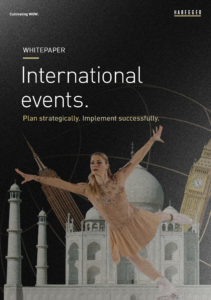
International events are complex – but manageable. In our whitepaper, you’ll learn what truly matters to ensure your project is executed professionally, efficiently, and with strong brand impact worldwide.
Subscribe to our Newsletter and follow us on social media.