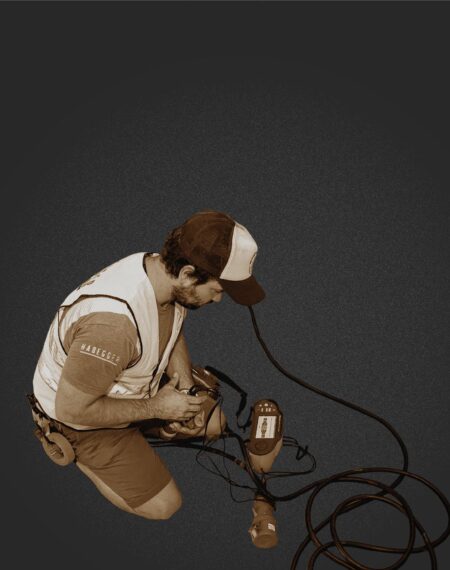
As part of our campaign “Habegger around the world”, we spoke with Christoph Runne. He is Show Director and Team Leader Show Direction at Habegger. With his many years of experience in international large-scale projects – from corporate management meetings to sporting events – he offers exciting insights into how creative concepts are developed, the role of the opening moment, and what really matters at international corporate events.
I gained my first international experience at the 2012 European Athletics Championships in Helsinki, back then as a intern, to understand how such an event works and where potential lies. This period was a major learning for us as the Habegger team. A year later, at the Indoor European Championships in Gothenburg, we were already able to test our own concepts. Things really took off in 2014 with the European Athletics Championships in Switzerland, where I played a key role.
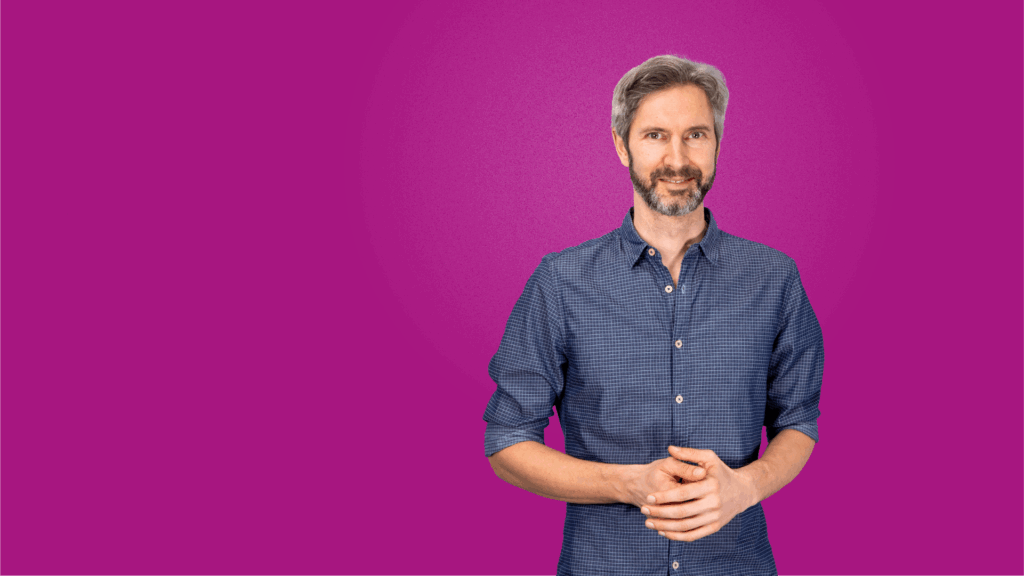
Since 2016, I have also been managing the management meetings for several major global corporations – each with a clearly international event focus. These long-term partnerships are built on trust and close collaboration. I have worked in numerous countries: Greece, Italy, Spain, Sweden – across Europe, but also repeatedly in the USA and other overseas destinations. On average, I accompany three major international productions per year. In total, we are now at around 45 to 50 projects – from corporate events to international sports events.
An international event does not necessarily have to take place abroad. A management meeting in Switzerland with an international audience, different languages and different cultures also counts. Switzerland is a hotspot for congresses and global events – many international events take place practically on our doorstep.
Corporate events are usually planned in a more streamlined way for efficiency reasons. They often involve management meetings, product presentations or corporate gatherings. Here, the show director is closely involved in the concept from the start and significantly shapes the programme.
Sports events have more detailed organisation, with more sub-contracts and various stakeholders involved. Nevertheless, one principle applies to both worlds:
The opening moment sets the tone and the perception for the entire event.
Especially for corporate events, this moment is crucial. A high-quality, aesthetic and emotional opening makes the entire occasion exciting and appealing – even if what follows is “only” presentations. If the opening is lacklustre, attention fades, the audience quickly loses interest, and the messages fail to resonate. At the same time, a strong opening raises expectations and sparks curiosity for what comes next.
For corporate events, the key questions at the beginning are: Why are we here? What do we want to achieve? This goal orientation shapes the entire dramaturgy. Sports events, on the other hand, ask: What does the event want to convey?
Sports events are denser and faster, with highlights that follow one another directly. The dramaturgy must sometimes incorporate existing requirements, such as at the opening of the Youth Olympic Games: anthems, flags, the parade of nations – everything is fixed, and the creative implementation is our task. Our job is to integrate these rigid elements into the story so that they feel alive and still unfold their emotional power.
An international corporate event is not an incentive; often, it’s a call of urgency: “Market conditions are changing, that’s why you’re here, we need to respond.” Such events are work for the audience – not just entertainment.
The tone of the opening defines the perception of the event. Its impact is much stronger when storytelling shapes the beginning, rather than having the CEO start straight away with a speech. The aim is to engage the audience and set the mood so that the CEO receives their full attention.
Sports events work differently: Excitement, euphoria and expectations are already present; the opening is the starting shot, and the maximum level of joy must be generated in the shortest time. Corporate events often take one or two days to reach all participants.
A central success factor for us is the close cooperation between creation and technology. At Habegger, both teams sit in the same building – so we develop solutions together and know exactly which dimensions the stage or LED wall needs for the live moment.
We are a well-coordinated team and complement each other perfectly. Our strength lies in knowing exactly how things work live. Agencies that only plan on the computer sometimes lack a sense for dimensions – we know what size an LED wall or stage truly needs.
A live audience is dynamic; it reacts, interacts and gets distracted. A live audience is not like in the cinema where people sit still. You have to earn their attention – again and again. This instinct for how a live audience behaves is one of our strengths.
At corporate events, the focus is less on overt brand messages and more on making people feel proud of their own brand. Managers should think: “It’s cool to work here.” At the same time, it must not appear too luxurious – no one should feel that money is being thrown out the window.
It becomes exciting when companies create a dedicated event branding alongside their corporate design. This opens up many creative possibilities in storytelling and feels more engaging for the audience. Major sports events have been doing this for a long time – just think of the branding of a football World Cup.
At Habegger, concept creators and visual designers work in the same office, so event CI and storytelling develop hand in hand.
A key success factor is close collaboration with local show acts and suppliers who know the city and its culture. This allows storytelling elements to be integrated optimally.
Example: A roadshow for a 100-year anniversary that includes a major event on each continent. Even at the planning stage, we coordinate the structure with local organisers. This creates identification and motivation – local teams are actively involved in the implementation.
One highlight was a management meeting with an orchestra that was initially hidden behind an LED wall. When it was revealed, the surprise was perfect. With this staging, we won the Xaver Award 2022. Moments like these are unforgettable.
Of course, there are challenges too: Different cultures and working methods require flexibility. In Central Europe, trades work very independently; elsewhere, the structure is more hierarchical. If you work with five people in Switzerland, you often need 15 in southern countries. And then there is the famous “Yes, yes, no problem” – you believe everything is settled, and in the end, nothing happens. You have to learn how to handle that.
Music is a universal tool, as emotions are understood worldwide. Humour, however, varies greatly between cultures. We always work with local partners who know the culture and bring valuable input to the storytelling. Our global network, such as through the AV Alliance, ensures that standards and quality expectations are met worldwide.
A major mistake is failing to guide the audience’s attention. I remember a carefully produced opening film that lost its impact because the room was still unsettled. The first 10–15 seconds were missed because the audience was still talking. Managing attention deliberately is essential.
Think early on: What is it worth to us? Many want a major opening with a small budget – and in the end, huge cuts are made. My advice: a feasibility study at the start, to clearly define how much of the budget can realistically go into the opening. Based on this, we plan the concept.
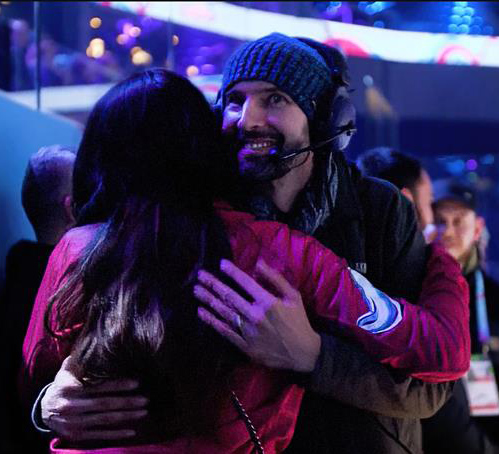
International events thrive on strong openings, cultural sensitivity, and close collaboration between creation and technology. For me personally, the most rewarding moment is when the audience leaves an event surprised, moved and inspired – with a smile on their faces. That’s when I know: We did a good job.
International events are complex – but manageable. In our whitepaper, you’ll learn what truly matters to ensure your project is executed professionally, efficiently, and with strong brand impact worldwide.
Subscribe to our Newsletter and follow us on social media.